
Last updated September 22, 2026
Level 1 sweep and inspection to the NFPA 211 annual standard - flue, crown, cap, and flashing checked and photographed
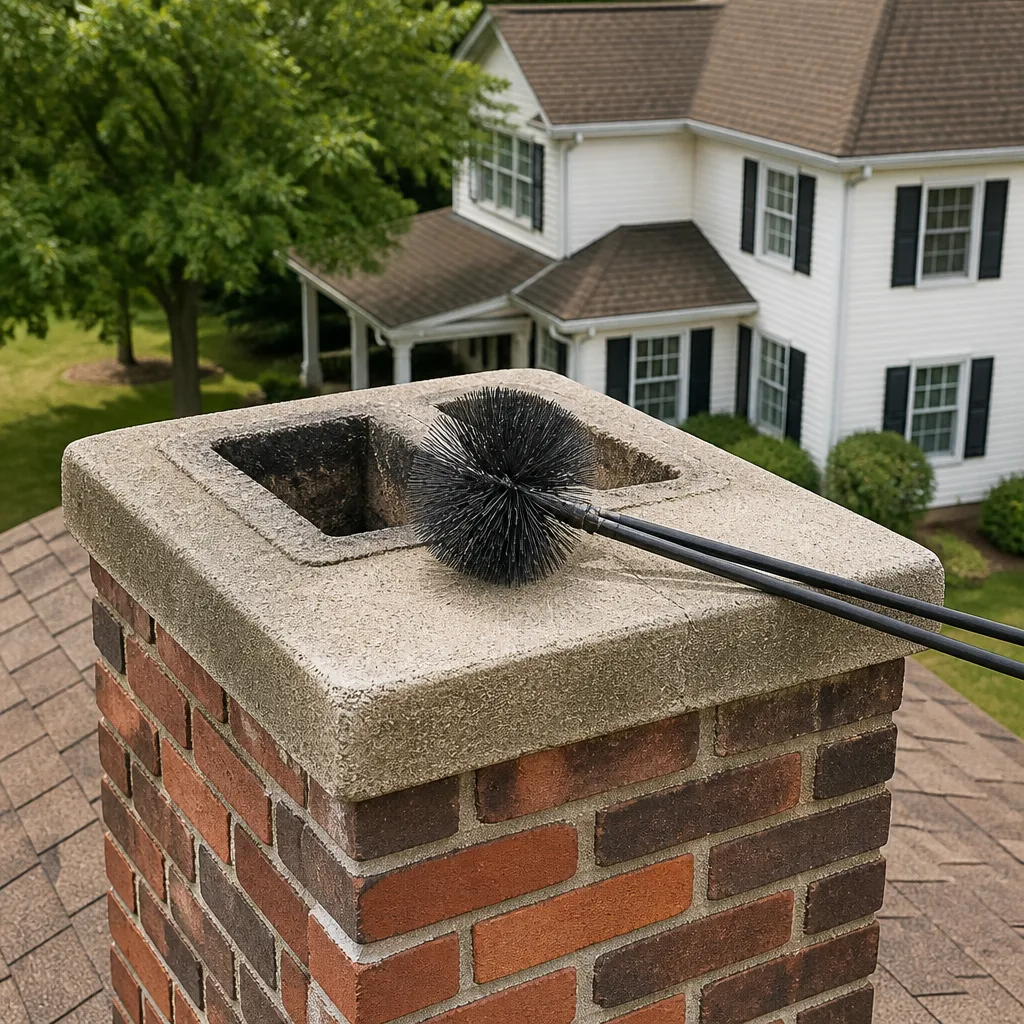
Chimney sweep logs do not sweep chimneys. They loosen some creosote - which then falls where a brush and vacuum still have to collect it.
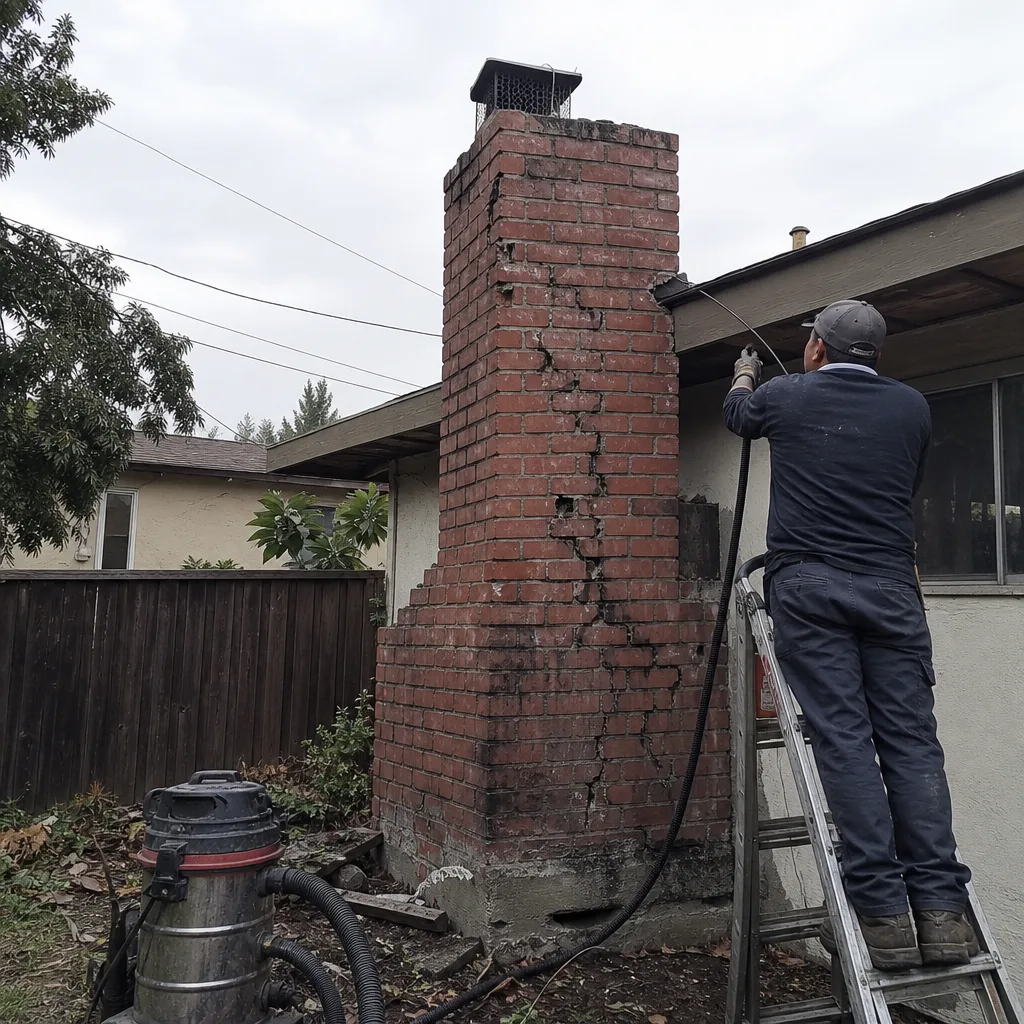 Before
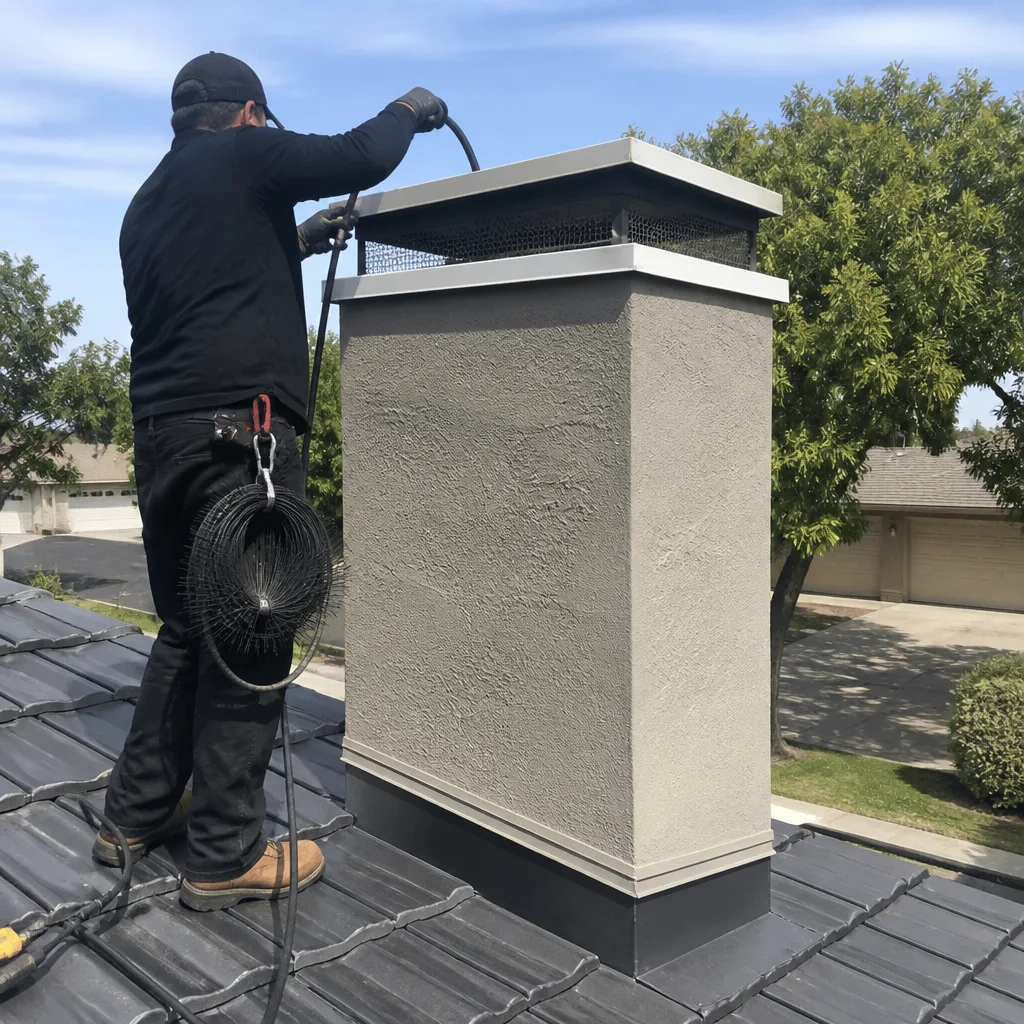 After
After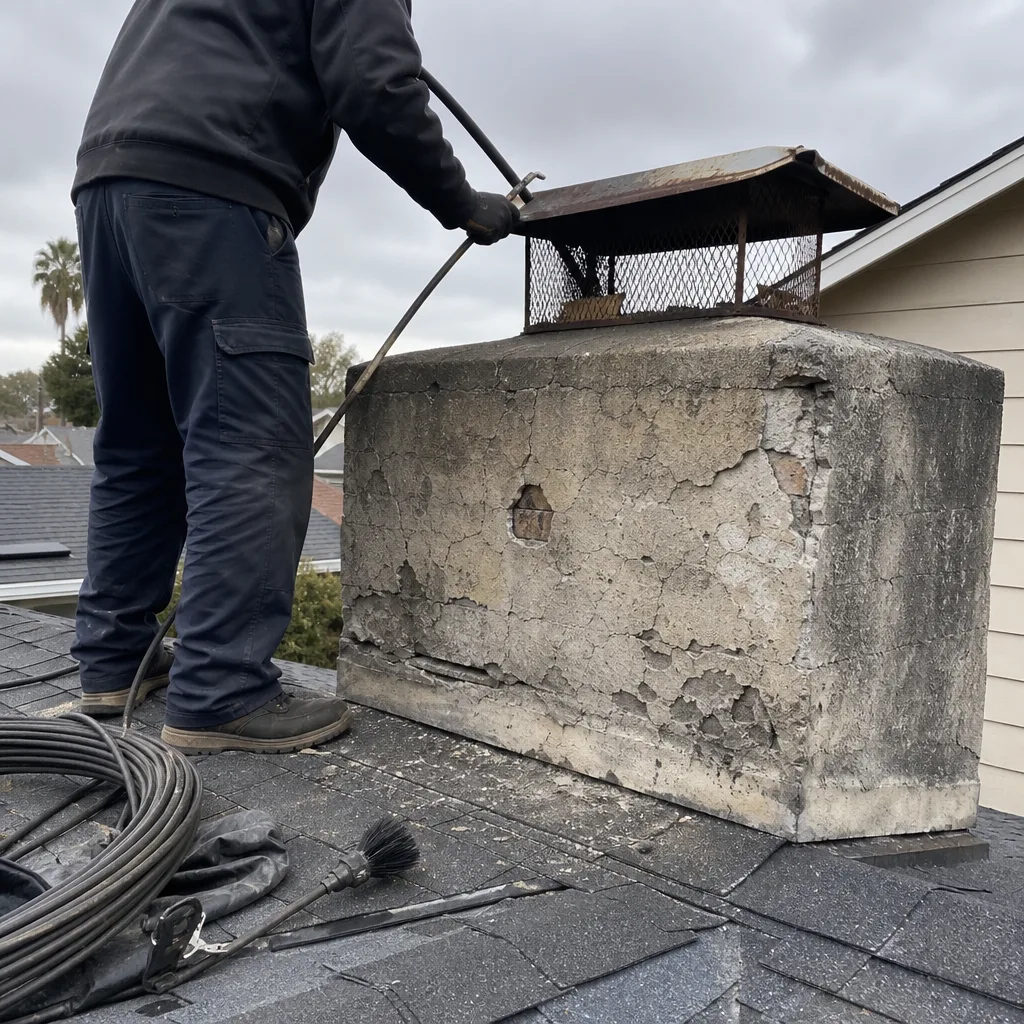 Before
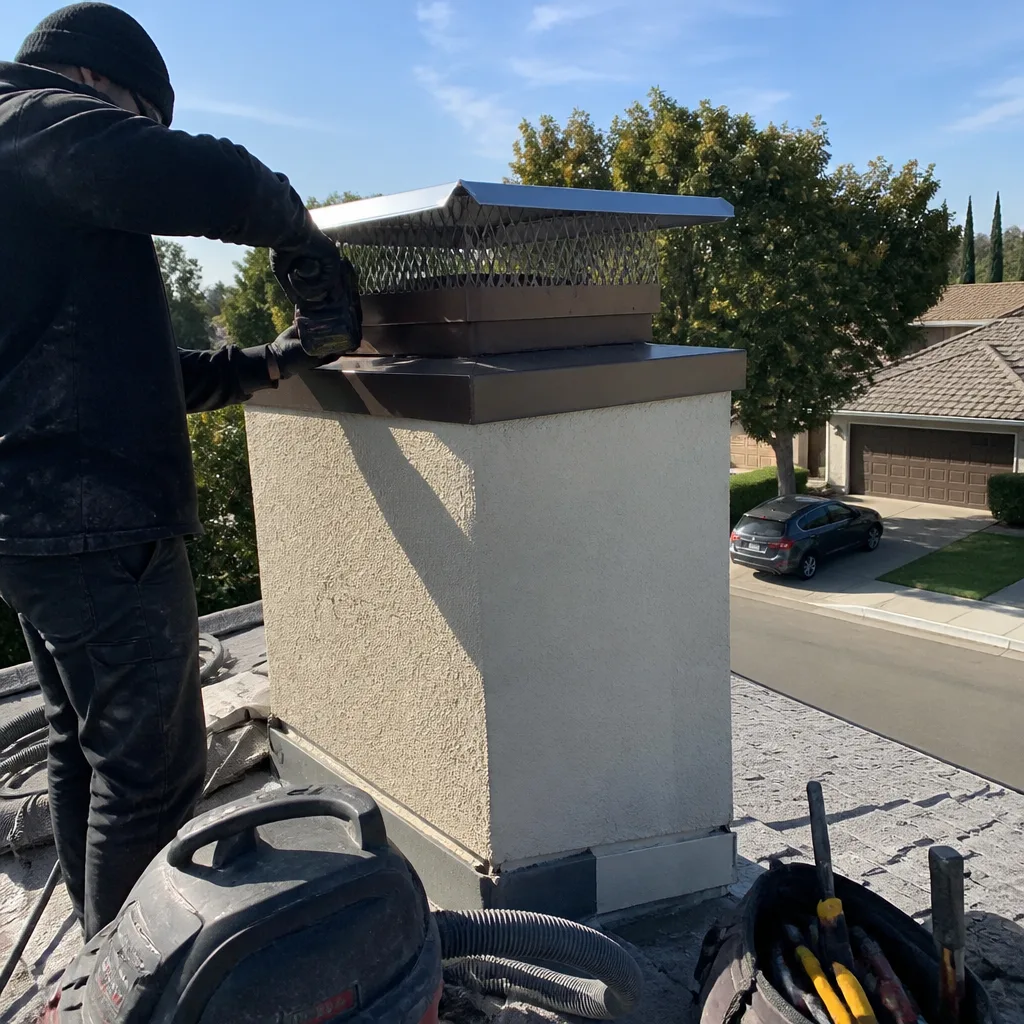 After
After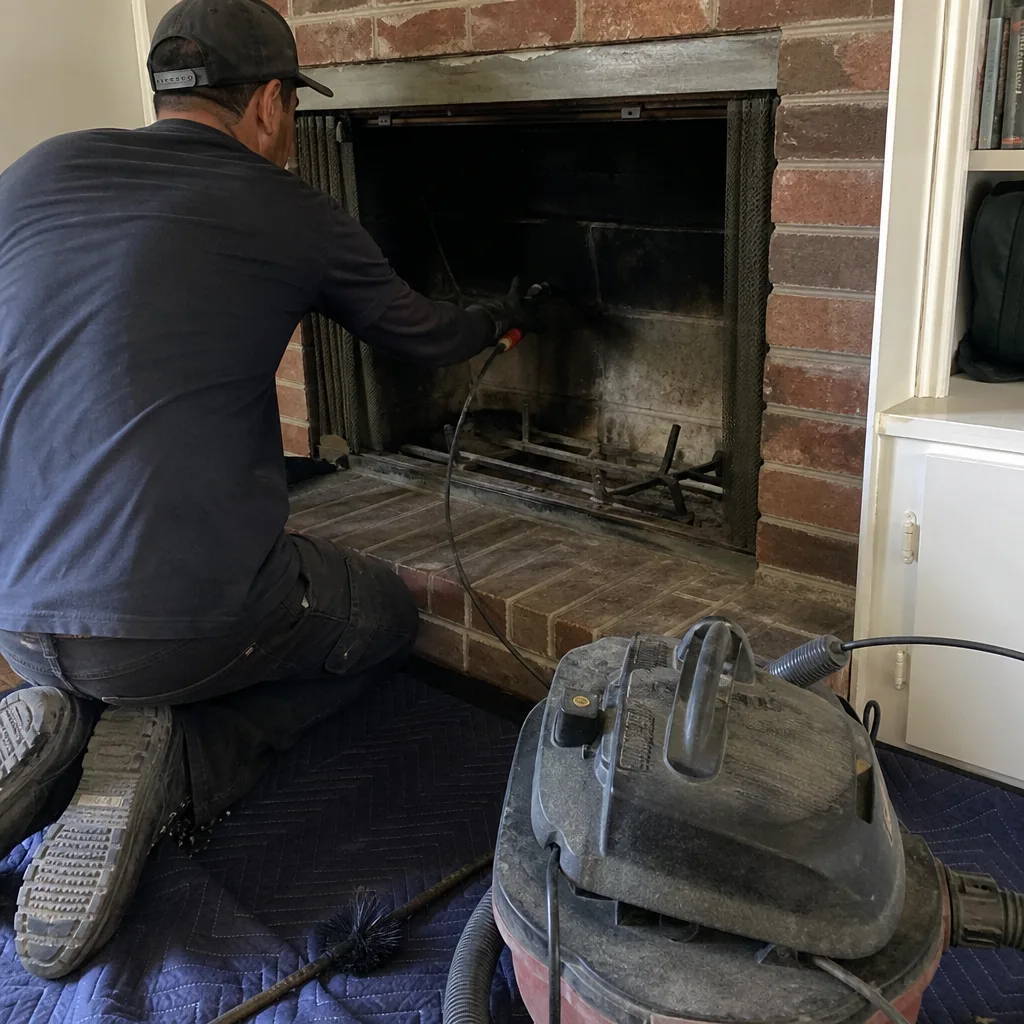 Before
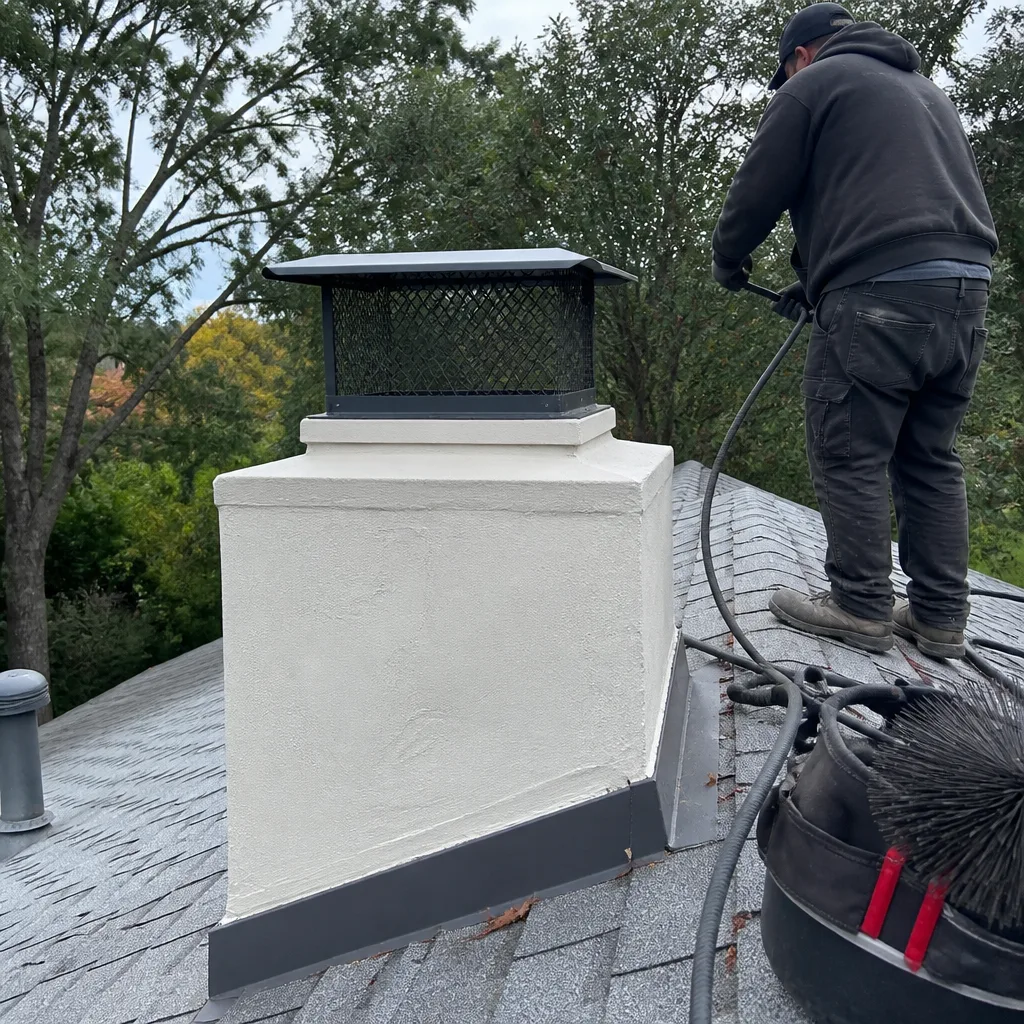 After
AfterChimney Cleaning Permits, Codes & Inspections in CA: What You Need to Know
A Santa Clara homeowner had a cracked flue liner relined without a permit in 2021. The work was done by a sweep with 4.9 stars on Yelp. Two years later, the absence of a final inspection record - not the relining itself - cost them $6,200 in retrofits required to close their sale escrow. This complete guide to chimney cleaning in Santa Clara explains why chimney cleaning rarely needs a permit, but the repair work it uncovers often does, and how the inspection report you receive determines which path you’re on. We’ll map Santa Clara’s specific permit thresholds, the California codes that govern them, and why documentation matters more than the work itself.
Quick Answer
Chimney cleaning and sweeping in California does not require a building permit. However, repairs commonly found during cleaning - including flue relining, firebox rebuilds, crown replacement, and structural alterations - typically do require permits through your local building department. In Santa Clara, the city uses the California Residential Code and California Fire Code as adopted standards, and a documented Level 2 chimney inspection report is the document that determines whether your project needs permitting or can proceed as maintenance.
Table of Contents
- When Chimney Cleaning Becomes Repair Work
- California Residential Code and Fire Code Requirements
- Santa Clara Building Department Permit Rules
- Why NFPA 211 Matters for Your Inspection Report
- How Insurance Carriers Use Camera-Scan Documentation
- What Real Estate Transactions Actually Require
- What Happens During a Permitted Chimney Project
- Common Mistakes to Avoid
- When to Call a Professional
- Frequently Asked Questions
 Before
 After
AfterWhen Chimney Cleaning Becomes Repair Work
The threshold between maintenance and alteration is where most homeowners get surprised. In our experience across more than 38,000 chimney inspections since 2009, roughly 40% of routine sweeps in Santa Clara reveal chimney cleaning warning signs that cross into permitted work.
Maintenance (typically no permit required):
- Removal of Class I or Class II creosote deposits from a sound flue liner
- Chimney cap cleaning and basic debris removal
- Firebox brick repointing where no structural elements are modified
- Damper adjustment or replacement of like-for-like components
Alteration (permit typically required):
- Flue relining with stainless steel, aluminum, or cast-in-place systems
- Firebox rebuilds involving demolition of existing masonry
- Crown replacement or reconstruction
- Smoke chamber parging (resurfacing with refractory mortar)
- Chimney height modifications or termination changes
- Installation of new appliances (inserts, stoves, gas log sets) requiring venting alterations
The distinction matters because California building officials treat chimney work differently than many homeowners expect. A cracked flue liner in a 1970s Almaden Valley ranch, for example, cannot simply be “patched.” The California Residential Code Section R1001 requires that flue liners be intact and properly sized for the appliance served. When our camera scan reveals a breach, the path forward is a permitted relining project with final inspection - not a quick fix.
We’ve seen this confusion repeatedly in Santa Clara’s older neighborhoods. Homes in the Burbank, Rose Garden, and Willow Glen-adjacent areas often have original clay tile liners that have deteriorated after 50+ years of thermal cycling. The homeowner books a cleaning. We find spalling tiles, mortar loss, or a complete liner breach. Suddenly the scope shifts from a $250 sweep to a $3,800-$6,500 relining project that requires permits, inspections, and sweep maintenance checklist documentation for the property record.
This is why Clause 4 of the Haven Standard requires a photo record on every job. The images from our camera scan become the evidence that determines your regulatory path. Without them, you’re guessing at whether permits apply.
California Residential Code and Fire Code Requirements
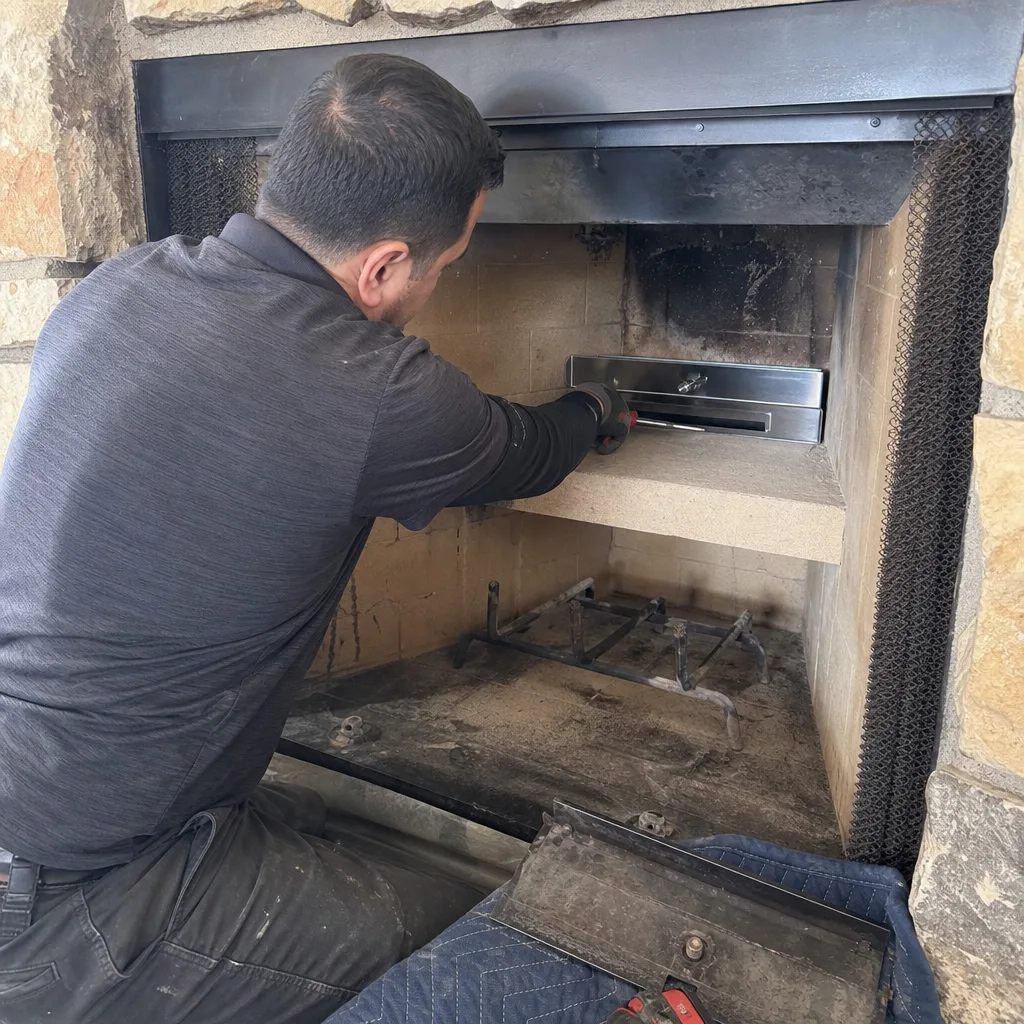
California doesn’t write its own chimney code from scratch. The state adopts model codes with California amendments, and two documents govern virtually all chimney work: the California Residential Code (CRC, based on the International Residential Code) and the California Fire Code (CFC, based on the International Fire Code).
Key CRC sections for chimney work:
- Section R1001 - Masonry chimney construction standards, including liner requirements, wall thickness, and height clearances
- Section R1002 - Factory-built chimney and fireplace standards, including listing requirements and installation per manufacturer instructions
- Section R1003 - Chimney and vent termination requirements, critical for wildfire-prone areas
The CRC defines a chimney as “one or more passageways, vertically or nearly so, for conveying flue gases to the outside atmosphere.” That definition becomes important when modifications change the passageway configuration - triggering permit requirements.
The California Fire Code, enforced by local fire marshals, references NFPA 211 as a standard for chimney inspection, maintenance, and clearance to combustibles. Section 603 of the CFC specifically addresses heating appliances and requires maintenance “in accordance with the manufacturer’s instructions and NFPA 211.” This reference gives NFPA 211 legal standing in California - it’s not merely a trade guideline, but a code-adopted standard that courts and insurers recognize.
For Santa Clara homeowners, the practical impact is this: your chimney sweep’s adherence to NFPA 211 inspection protocols isn’t just good practice. It’s the documented methodology that satisfies code requirements for due diligence. When we perform a Level 2 inspection under NFPA 211, we’re following the procedure that California law treats as the standard of care.
Climate factors specific to our region also affect code application. Santa Clara’s Mediterranean climate with dry summers and occasional winter freeze-thaw cycles accelerates crown deterioration and mortar joint failure. The CRC’s masonry requirements assume proper weather protection - when crowns fail, as they commonly do in homes near the foothills with greater sun exposure, the resulting water intrusion can compromise structural integrity and trigger repair scope that requires permitting.
Santa Clara Building Department Permit Rules
The City of Santa Clara Building Division processes permits for chimney work through its standard building permit system, with specific exemptions that homeowners should understand.
Work explicitly requiring permits in Santa Clara:
- Flue relining or liner replacement of any type
- Firebox reconstruction or masonry rebuild exceeding 25% of the facing surface
- Crown replacement involving formwork and poured concrete or cast-in-place systems
- Chimney height modifications or termination changes
- Installation of factory-built fireplaces or inserts not previously listed for the existing chimney
- Structural repairs to chimney foundations or supporting elements
Work typically exempt from permits:
- Routine chimney sweeping and creosote removal
- Cap replacement with like-for-like dimensions and materials
- Damper repair or replacement without flue modification
- Minor tuckpointing (repointing) not exceeding 25% of mortar joints
- Sealing minor crown cracks with approved sealant products
The city’s permit fee schedule for chimney alterations typically runs $350-$850 depending on project value, with plan review required for relining projects involving appliance changes. Final inspection must be scheduled within 180 days of permit issuance, and the approved inspection record becomes part of the property’s permanent file.
This permanent record is where the escrow story from our opening hook becomes relevant. When that Santa Clara homeowner’s buyer conducted due diligence, the title company flagged unpermitted work discovered in the disclosure. The seller had to obtain a retroactive permit, which required opening walls to verify liner installation met code, then completing the work to current standards rather than 2021 standards. The $6,200 represented the difference between doing it right the first time and doing it twice.
Santa Clara’s building inspectors specifically verify liner sizing calculations (matching appliance BTU output to flue cross-sectional area), proper clearances to combustibles, and termination height above roof planes. These are not visual checks - they require access, measurement, and documentation that aligns with the approved permit plans.
Why NFPA 211 Matters for Your Inspection Report
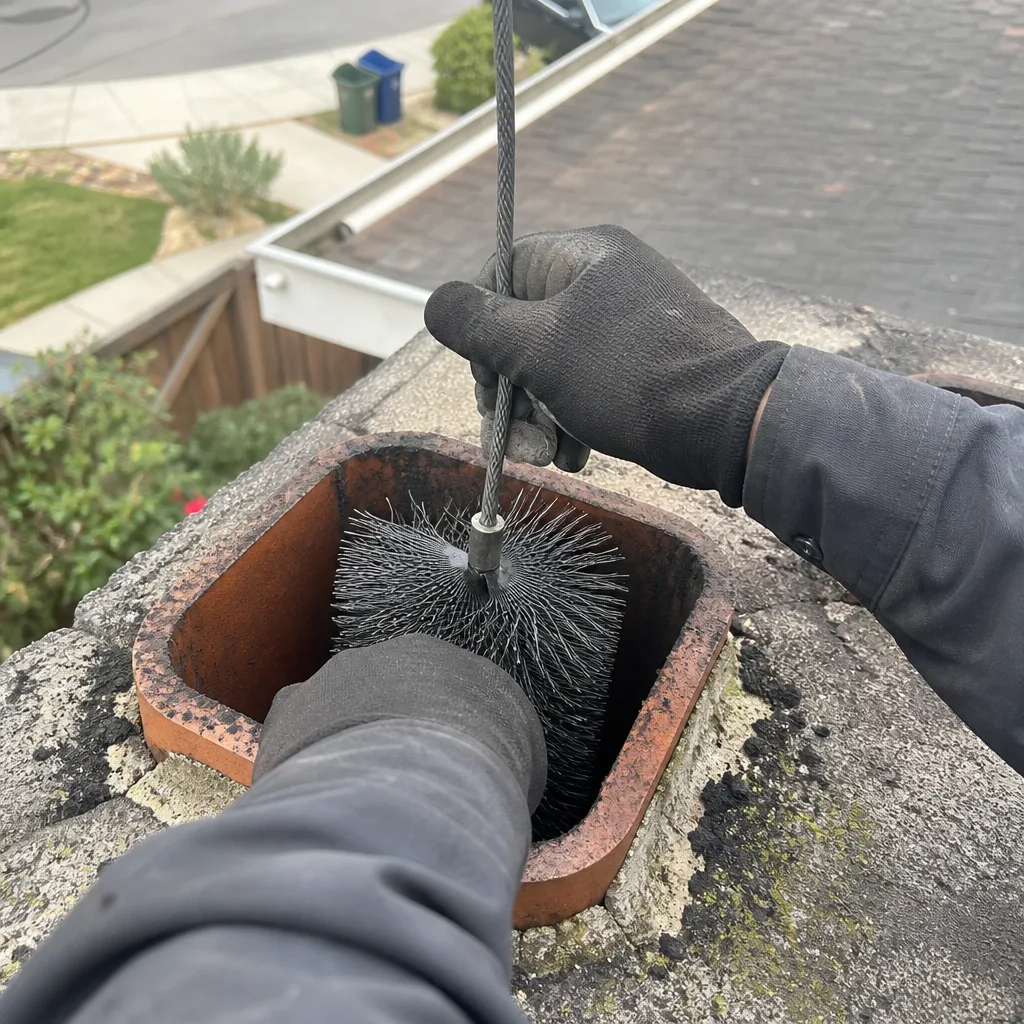
NFPA 211, Standard for Chimneys, Fireplaces, Vents, and Solid Fuel-Burning Appliances, is published by the National Fire Protection Association. In California, its importance comes from adoption by reference in the California Fire Code - specifically CFC Section 603 and related provisions.
This adoption transforms NFPA 211 from a voluntary industry standard into a legally recognized benchmark. When a chimney professional performs work “in accordance with NFPA 211,” they’re following procedures that California courts and insurance adjusters treat as the minimum acceptable practice.
The three inspection levels defined in NFPA 211:
| Level | Scope | When Required |
|---|---|---|
| Level 1 | Visual inspection of readily accessible portions; no tools or ladders beyond basic equipment | Annual maintenance of systems with no changes, no known problems, and continued same use |
| Level 2 | Visual inspection plus accessible portions in attics, crawl spaces, and basements; video scanning of flue interior; evaluation of clearance to combustibles | Sale or transfer of property; changes to appliance or fuel type; malfunction or external event (chimney fire, earthquake, weather damage); new installation verification |
| Level 3 | Destructive inspection involving removal of building materials to access concealed portions; may require reconstruction | Level 1 or 2 inspection suggests hidden hazard that cannot be evaluated otherwise |
Level Two Chimney Co. takes its name from Level 2 inspection because we made it our default in 2009 - years before California insurers or real estate professionals widely requested it. Clause 4 of the Haven Standard requires this documentation on every visit, not as an upsell but as standard practice.
The legal standing of a Level 2 report becomes critical in three scenarios we encounter regularly in Santa Clara:
Insurance claims: After a chimney fire or smoke damage event, carriers request inspection documentation to establish whether the chimney was maintained appropriately. A Level 2 report with dated camera footage provides timestamped evidence of liner condition, creosote accumulation rate, and any defects that were or were not present before the incident.
Real estate disclosure: California Civil Code Section 1102 requires disclosure of material defects. A Level 2 report obtained before listing identifies defects the seller must disclose, and documentation of completed repairs with permit finalization demonstrates due diligence to buyers.
Dispute resolution: When workmanship is questioned, the dated photo record from a Level 2 inspection establishes baseline conditions and verifies that recommended work was necessary.
We’ve provided these records in litigation support for Santa Clara County cases involving chimney-related property damage. The reports that hold up are those with clear methodology (NFPA 211 compliance stated), equipment calibration records, and unedited footage with narration.
How Insurance Carriers Use Camera-Scan Documentation
California insurance carriers have tightened chimney documentation requirements significantly since 2019, particularly for homes in wildland-urban interface zones and older neighborhoods with masonry chimneys.
The standard homeowner’s policy covers sudden and accidental damage - fire, lightning, explosion - but excludes damage from maintenance neglect. When a chimney fire occurs, the adjuster’s first question is whether the chimney was properly maintained. Their second question is whether the work was documented.
What carriers specifically request:
- Date-stamped inspection report from a qualified chimney professional
- Video or photographic documentation of flue interior conditions
- Clear statement of recommended repairs and homeowner response
- Permit and final inspection records for any completed repair work
- Verification that the installed liner or appliance is listed and properly sized
The camera-scan report is the document that answers most of these questions simultaneously. Our fireplace services in Santa Clara include this documentation as standard because we’ve seen too many homeowners discover their “annual sweep” from another company produced nothing more than a handwritten receipt.
In 2022, we supported a Santa Clara homeowner whose carrier initially denied a $47,000 smoke damage claim following a chimney fire. The denial cited “failure to maintain.” We provided our Level 2 report from 18 months prior, which documented a sound liner, normal Class I creosote accumulation, and no recommended repairs. The camera footage showed the fire originated in a defective factory-built chimney section installed by a previous owner - not maintenance neglect. The carrier reversed its denial.
Materials matter for insurance acceptance as well. We source liners and components from Gelco, Olympia Chimney, and Copperfield through Haven’s buying network specifically because these manufacturers maintain current UL listings and provide documentation packets that satisfy carrier requirements. An unlisted liner, regardless of installation quality, can void coverage.
The 365-Day Done Right Promise applies here too. If our documentation or installation is questioned, we provide the records and make it right - Clause 1 of the Haven Standard requires the written warranty that backs this commitment.
What Real Estate Transactions Actually Require
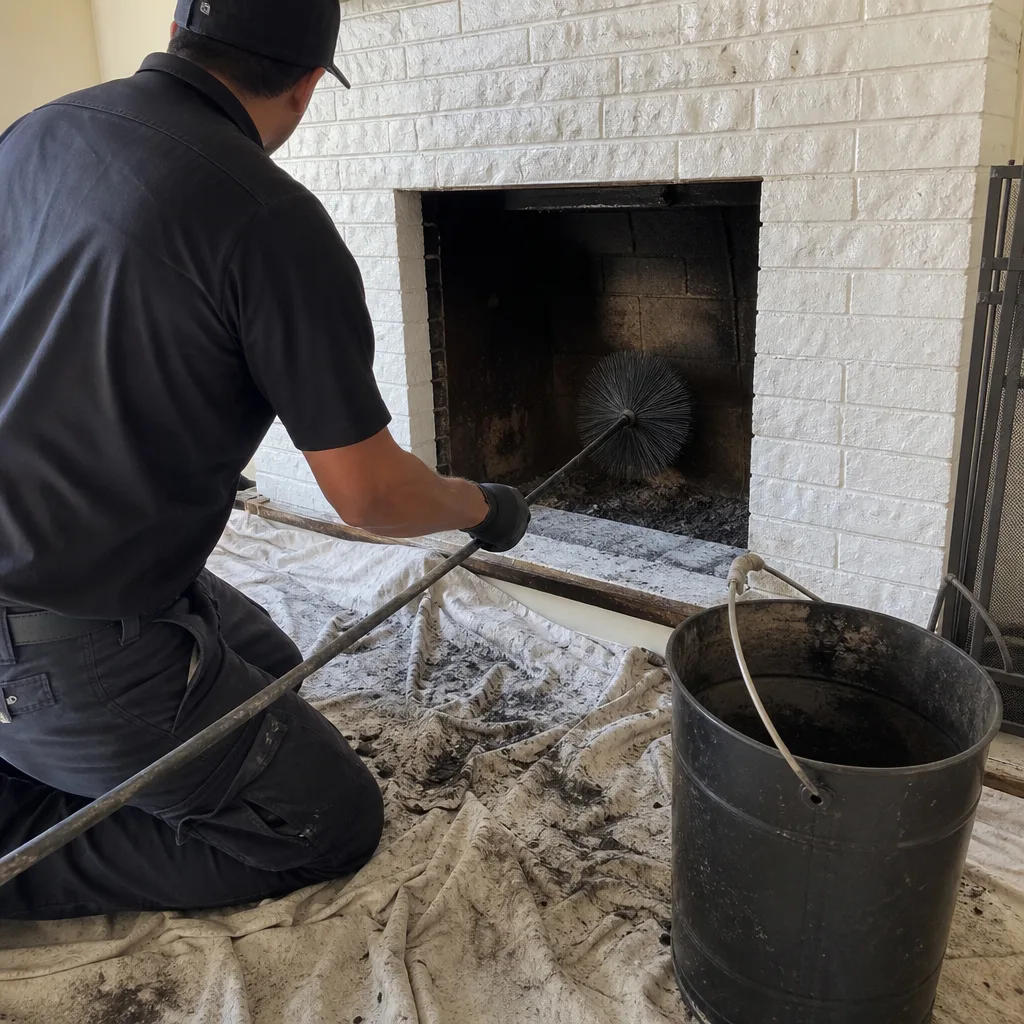
Santa Clara’s competitive real estate market, with median home prices exceeding $1.5 million, makes due diligence exceptionally thorough. Buyers and their agents scrutinize permit history, and unpermitted chimney work is a common escrow hurdle.
The critical distinction: home inspector vs. chimney professional
A California home inspector’s fireplace evaluation, conducted under Standards of Practice from the California Real Estate Inspection Association (CREIA), is visual-only from the firebox opening and roof surface. They do not scan the flue interior, evaluate the smoke chamber, or assess liner condition beyond what can be seen with a flashlight. Their report typically notes “recommend evaluation by qualified chimney professional” - which is not a finding but a referral.
A Level 2 chimney inspection, by contrast, includes:
- Video scanning of the entire flue length from firebox to termination
- Evaluation of the smoke chamber (the area above the firebox, below the flue, where many hazards hide)
- Clearance measurement to combustible framing in accessible areas
- Assessment of crown, cap, and exterior masonry condition
- Documentation of appliance listing and proper sizing
For escrow purposes, the home inspector’s note creates an obligation. The seller must either provide a qualified chimney professional’s report or accept a credit/price reduction. The Level 2 report satisfies this obligation with documentation that can be transferred to the buyer.
We’ve conducted pre-listing inspections for Santa Clara homeowners in neighborhoods from Rivermark to the Princeton area. The typical pattern: homeowner assumes their annual “sweep” provided adequate documentation, discovers it was a 20-minute cleaning with no inspection, and faces a compressed timeline to obtain proper documentation before listing photos or open houses.
Our recommendation for sellers: obtain a Level 2 inspection 60-90 days before listing. This provides time to complete any permitted repairs and obtain final inspections without escrow pressure. For buyers: request the seller’s chimney documentation specifically, not just the home inspection report. If the seller cannot produce a dated Level 2 report with camera footage, budget $350-$550 for your own inspection before removing contingencies.
Chimney repair work completed without permits requires disclosure in California. The standard purchase contract asks directly about “room additions, structural modifications, or other alterations made without required permits.” Chimney relining and firebox rebuilds qualify as structural modifications. Failure to disclose, when the unpermitted work is later discovered, exposes sellers to post-closing liability.
What Happens During a Permitted Chimney Project
Understanding the permit process helps homeowners evaluate contractor proposals and avoid the surprises that derail timelines and budgets.
Step 1: Pre-application inspection and documentation
Before permit application, a Level 2 inspection documents existing conditions. We measure the flue, identify the appliance being served, and note any code deficiencies that must be addressed. This inspection produces the scope document that feeds the permit application.
Step 2: Permit application and plan submission
For relining projects, Santa Clara requires a permit application with liner sizing calculations showing the proposed liner’s cross-sectional area matches or exceeds the appliance’s requirements per CRC Section R1001.9. Factory-built chimney installations require manufacturer installation instructions and listing documentation. We handle this submission as part of our project management.
Step 3: In-progress inspection (rough inspection)
For relining projects, the building inspector verifies liner placement, proper connections, and clearance to combustibles before the liner is fully enclosed. This inspection must occur while work is accessible - typically the same day or day after liner installation begins.
Step 4: Final inspection and documentation
The inspector verifies completed work matches approved plans, tests appliance operation if applicable, and issues a final inspection approval. This record is filed with the city and becomes searchable in property records.
Step 5: Documentation transfer to homeowner
We provide the final inspection record, our completed photo documentation, and written warranty under the Haven Standard. This packet is what you’ll need for insurance, escrow, or future sale - and you can find more guides & resources on our blog.
Typical timeline in Santa Clara: permit issuance within 3-5 business days, rough inspection within 1-2 days of request, final inspection within 1-2 days of completion. Total project duration for a standard relining: 2-4 days of work spread across 1-2 weeks including inspections.
Contractors who propose “no permit needed” for clearly permitted work are either misinformed or deliberately evading oversight. Either way, the homeowner bears the risk. We’ve been called to remediate work from unpermitted relining projects where the liner was improperly sized, unsupported, or terminated incorrectly - all conditions a building inspector would have caught.
Common Mistakes to Avoid
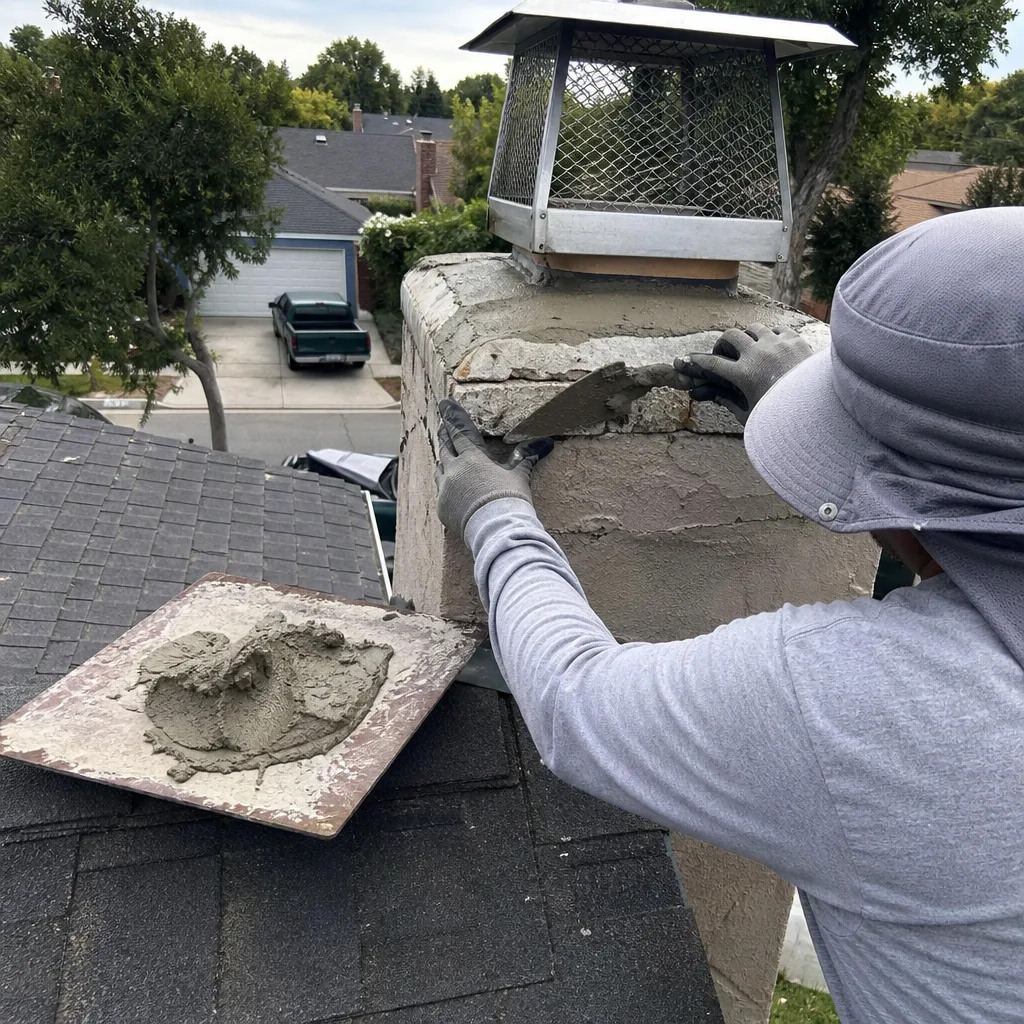
- Assuming your annual sweep includes inspection documentation. Most “sweeps” in the Santa Clara market are cleaning-only services with no camera scan, no written report, and no record suitable for insurance or escrow. Ask specifically what documentation you’ll receive before booking.
- Accepting verbal assurances that permits “aren’t needed for this.” Permit requirements are determined by scope, not contractor preference. A relining project always requires permits in Santa Clara. If your contractor suggests otherwise, obtain a second opinion.
- Completing repair work before obtaining pre-work documentation. The camera scan establishing baseline conditions must precede alterations. We’ve encountered disputes where homeowners cannot prove that damage existed before repair work began, complicating insurance claims and warranty coverage.
- Neglecting to verify final inspection completion. Some contractors obtain permits but never schedule final inspection, leaving the permit open and the work legally incomplete. Always request the final inspection record and verify it in city records.
- Using unlisted materials to save cost. Liner systems and components without current UL listings may fail insurance scrutiny and violate CRC requirements. We specify Famco and other listed manufacturers specifically for this compliance pathway.
- Waiting until escrow pressure to discover documentation gaps. Pre-listing inspections avoid compressed timelines and strengthen negotiating position. The seller who can produce complete documentation commands confidence; the seller who cannot faces credits or delays.
- Treating the home inspector’s fireplace note as sufficient. CREIA Standards of Practice explicitly limit home inspector fireplace evaluation. Their referral to a chimney professional is an acknowledgment of limitation, not a finding of condition.
When to Call a Professional
Call a qualified chimney professional when you’re buying or selling a home with a fireplace; when your annual sweep reveals conditions beyond normal creosote accumulation; when you smell smoke in the house, hear dripping in the flue, or see exterior masonry deterioration; or when you’re converting fuel types or installing a new appliance. Any of these scenarios triggers the documentation and compliance considerations this guide covers.
Level Two Chimney Santa Clara offers free estimates in Santa Clara - call (650) 229-6358. Every estimate includes a written price, written scope, and written warranty before any work begins, under Haven Standard Clause 1. We also provide free second opinions on any competitor’s written estimate. Our background-checked, uniformed technicians arrive on schedule with license information displayed, and you’ll receive a text when your technician is en route.
Frequently Asked Questions
No. Routine chimney sweeping, creosote removal, and basic maintenance do not require building permits anywhere in California, including Santa Clara. Permits become required when the work involves structural alteration, flue relining, firebox rebuild, or appliance modification - the repair work that a proper inspection often uncovers. Call (650) 229-6358 for a free estimate if your sweep reveals conditions beyond routine maintenance.
A Level 2 chimney inspection with camera scan in Santa Clara typically ranges from $350-$550, depending on chimney accessibility and number of flues. This includes the video documentation, written report, and photo record required for insurance and escrow purposes. We deliver a written price before any work starts - no exceptions, under Haven Standard Clause 1.
A California home inspector evaluates fireplaces visually from the firebox opening and roof surface only, without flue scanning or internal evaluation. A Level 2 chimney inspection includes video scanning of the entire flue, smoke chamber assessment, clearance measurement, and documented photo record. For escrow purposes, the home inspector’s report typically refers you to a chimney professional - it does not substitute for one.
NFPA 211 recommends annual inspection for all chimney systems, with cleaning frequency determined by use and creosote accumulation rate. In Santa Clara’s climate, where many homeowners use fireplaces occasionally during mild winters, annual inspection often reveals that cleaning is needed every 1-2 years. Heavy use during cooler months in foothill areas like Almaden Valley may require annual cleaning. The inspection determines the schedule - not the calendar alone.
Skipped maintenance allows creosote accumulation, which increases chimney fire risk and can produce Class III glazed creosote requiring chemical treatment. Deferred inspection also means undetected liner breaches, crown deterioration, or water intrusion that progresses to structural damage. In Santa Clara’s market, lack of documentation additionally complicates insurance claims and real estate transactions. The cost of maintenance is predictable; the cost of neglect is not.
This depends entirely on what the camera scan reveals. A sound clay tile liner with intact mortar joints and no spalling may need no action. A breached, displaced, or deteriorated liner requires relining before safe use - not because we say so, but because the California Residential Code Section R1001.9 requires it. We show you the footage and explain what you’re seeing before recommending any work. Some conditions allow monitored deferral; others require immediate action. The photo record lets you see the difference for yourself.
The Bottom Line
Chimney cleaning itself is simple, permit-free maintenance. The complexity arises from what cleaning reveals - and from the documentation that determines whether you’re maintaining a system or altering one. In Santa Clara’s regulated, high-value real estate market, the permit record and inspection documentation matter as much as the work quality. A 4.9-star rating doesn’t create a permit trail; only proper process does. The Haven Standard’s requirements - written price before work, documented photo record, verified crew, and done-right promise - exist because we’ve seen what happens when they’re absent. Get the inspection. Get the documentation. Get it in writing.
Written by Corrine Halstead, Owner at Level Two Chimney Santa Clara, serving Santa Clara since 2009.